

Making a website that leads visitors to become customers involves both art and science. With the help of some key design principles, businesses can help optimize their presence online. In this article, we will look at key elements that you need to optimize your conversion rates using effective web design.
Understanding Conversion Rates
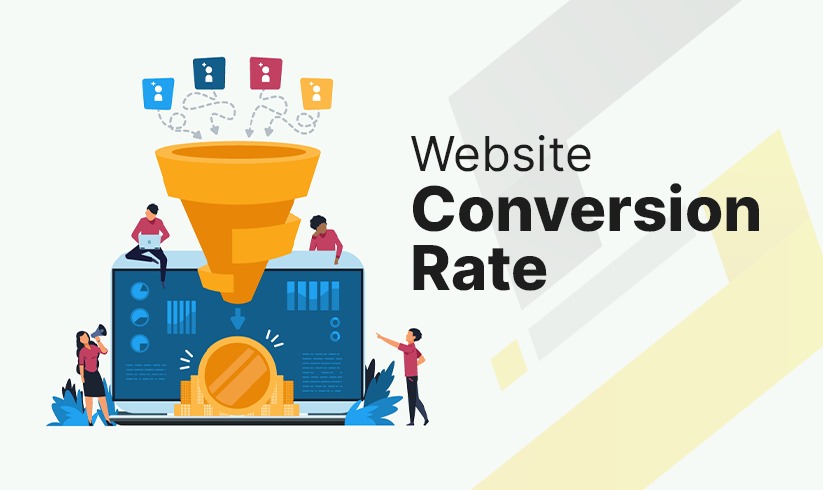
If a conversion rate is 2%, it means 2% of the visitors who visited the landing page took the desired action (buying a product, signing up for a newsletter, filling out a contact form, etc.). More visitors who go through all the steps of the funnel, the higher the conversion. And as a consequence, more business. This metric leaves no second to explain is essential for every company trying to pursue customers online.
Simplifying Navigation
Good navigation is one of the pillars of web design. Users need to reach what they are looking for without any confusion or frustration. A good UX is one where users get a straightforward menu and logical page structures.
Employ Descriptive Labels: Clearly label menu items. Avoid jargon or vague terms.
Reduce Menu Items: Only provide as many toplevel menu items as are necessary and not more; otherwise, you may overwhelm users.
Keep Layout Consistent: Use the same design on all other pages so users know where they are.
Crafting Compelling Visuals
And that’s where all these visual elements matter. Visuals: A good website uses visuals to tell the story of brand identity and brand values.
Use high-quality images that are clear and relatable to the content.
Color Psychology: Use colors associated with the brand message to provoke the desired action.
Whitespace usage: Use whitespace to prevent clutter and give elements some space to breathe.
Responsive Design
Responsive design is a necessity, given the fact that we are all using mobile devices more. A responsive website adapts smoothly to all screen sizes, providing the same user experience on all devices.
Use Fluid Grids: Use a navigation that is live if using, grow within a percentage.
Responsive Images: Make images that load in an appropriate manner, according to screen size.
Media Queries: Use media queries to apply styles based on device features.
Speed Optimization
The speed at which a page loads has a drastic impact on user experience and conversion rates. A slow website puts users off and increases the bounce rate.
Image Optimization: Optimize images for the web to reduce their size while maintaining quality.
Minimize HTTP Requests: Cut down requests by merging files and applying CSS sprites.
Use Caching: To minimize server load and enhance loading speed, consider making use of browser caching.
Engaging Content
Content is the heart of any website. Offers visitors value, helping them along the buyer journey.
Attention-grabbing headlines: Maintain headlines that draw interest and deliver the main point of the article swiftly.
Concise Copy: Write a clear and concise copy that captures the audience’s need and interest.
Include Call-to-Action(CTA): Get clear CTAs where you want users to take the next step
Building Trust
Trust is one of the key elements for turning visitors into customers. Visitors need reassurance that the business is safe and trustworthy, so a reputable website provides that reassurance.
Security Badges: Security badges are great to show visitors that your site is secure and that people can transact without any worry.
Customer Reviews and Testimonials: Showcase testimonials and reviews to add social proof.
So the first one is Transparent Policies: Know your privacy policies and TOS very well before moving further.
Effective Use of Analytics
Analytics tools help track the behavior of users to find out areas that need work. Using data analysis, businesses can decide on website improvements.
Heatmaps: To quantify how users are interacting with the site, heatmaps give the overall overview.
Conversion funnels: Monitor conversion funnels for insights into user drop-off points.
Test sign and sign: A/B analyze the response of the design structure.
Personalization
Being able to provide personalized experiences can boost engagement and conversion rates tremendously! When you use information about your visitors to guess their specifications and needs, this gives a sense of pride in any visitor that they are understood and cared for.
Dynamic Content: Present content that is hinged on user behavior and preferences.
Customized Suggestions: Recommend products or services from historical interactions.
User Accounts: Create accounts to use the service in a more seamless way.
Accessibility
Website accessibility is a legal requirement, but more importantly, a way to expand your audience to include all users, even those with disabilities.
Image alt text: Add details in the alt text of every image used.
Keyboard Accessibility: The site should be able to navigate with the help of a keyboard.
Readability: Use readable fonts and size in readability wise
Conclusion
If you need to improve conversion rates on your website, you can adopt these web design principles. Businesses are constantly adapting and evolving to meet the expectations of their users. If you’re looking for professional help, one of the web design company in Auckland may be able to assist you. If, while prioritizing user experience and ensuring an aesthetic, responsive, and reliable site, businesses can find themselves with a larger presence online.